Beaufort Street is best understood on foot. This self-guided walk runs south to north, from the city end to Inglewood, following the order in which the street grew. Use the interactive map below to preview each stop, then set off.
Mount Lawley
The Astor Theatre
Built 1914–15, opened as the Lyceum, remodelled in Art Deco style in 1939 and renamed the Astor in 1941.
Read more →- Perth
- Highgate
- Mount Lawley
- Inglewood
North is at the top. The list runs from Inglewood (north) down to the city end (south).
~5 km
Full route
City end to Dundas Rd
2–3 hrs
With stops
Or split into sections
10
Stops
Plus a Hyde Park detour
Before you go
- Start time: mornings are cooler in summer, and late afternoon lets you finish with dinner.
- Bring: water, sun protection and comfortable shoes.
- Getting back: buses run along Beaufort Street; see getting here.
- Respect: most buildings are private. Stay on public footpaths.
Stop 1: The city end
Begin near the Perth Cultural Centre, home to WA Museum Boola Bardip, the State Library and the Art Gallery of WA. Beaufort Street is believed to be named after Rear-Admiral Sir Francis Beaufort, the Admiralty hydrographer. See the city end.
Stop 2: Terraces, 225–241 Beaufort Street
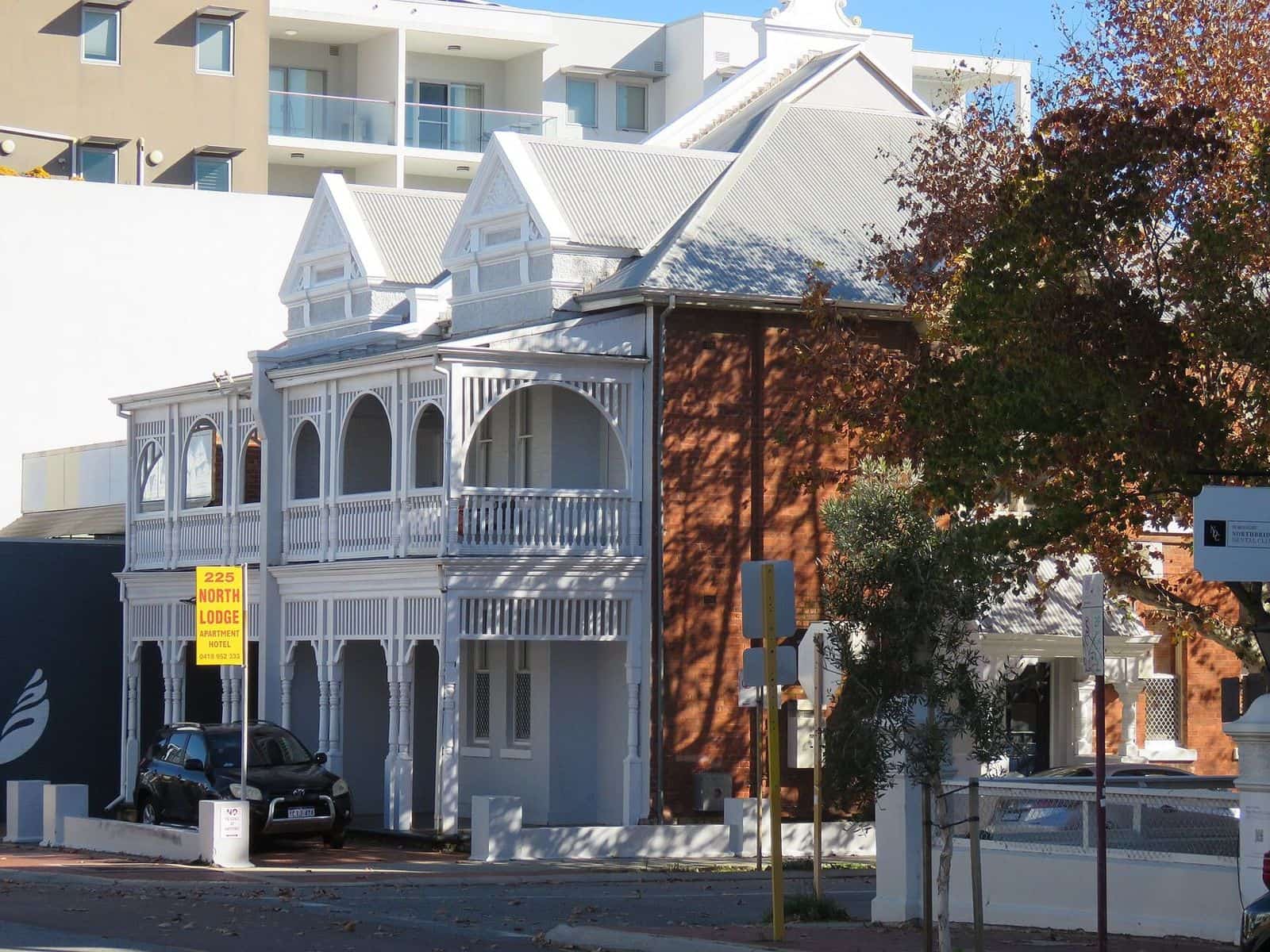
Walk north to the rows of 1890s terraces. The group at 235–241 dates from 1897. These modest homes show how dense housing was close to the city during the gold boom.
Stop 3: Bowra & O’Dea, 359 Beaufort Street
Continue to this 1937 Inter-War Functionalist building, designed by Samuel Rosenthal as funeral premises and now on the State Register. Note its clean horizontal lines, a contrast with the ornate terraces.
Stop 4: Sacred Heart Church
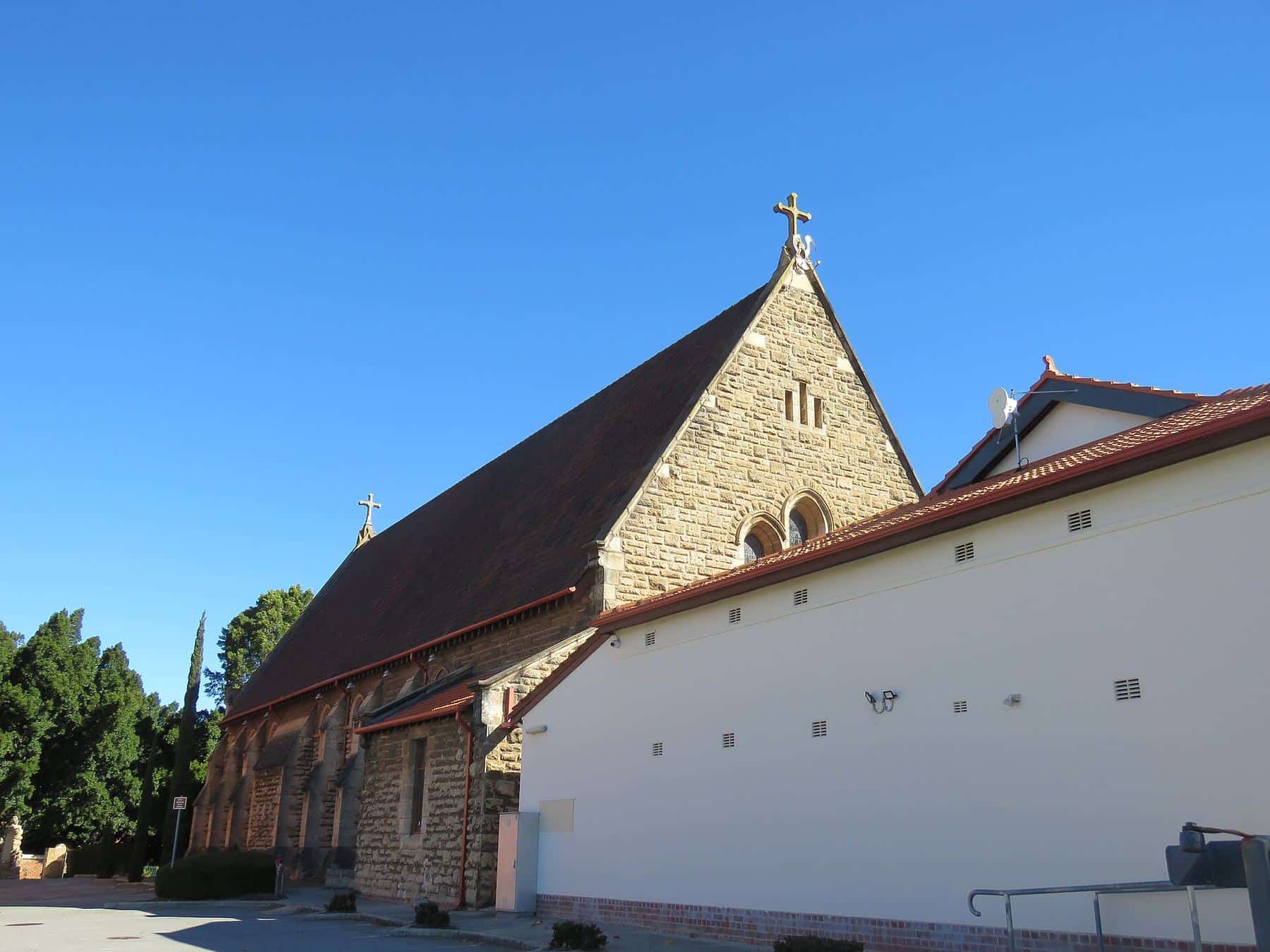
Turn briefly into Mary Street to see the red-brick Sacred Heart Church, whose foundation stone was laid in 1905 on a site chosen in 1891. Along the way, look out for the Queens Hotel (1897), a gold-boom corner pub.
Stop 5: Mary Street and the laneways
Highgate’s café and bar strip centres on Mary Street. Explore the laneways behind the shops for murals (see art), and stop for coffee.
Detour: Hyde Park
Walk a few blocks west to Hyde Park, known to the Whadjuk Noongar as Boodjamooling. Gazetted in 1897 and named in 1899, it has lakes, islands and huge old trees. A lake loop adds about 30–40 minutes including the walk there and back. See Hyde Park.
Stop 6: The Astor Theatre
Back on Beaufort Street, climb to Walcott Street and the Art Deco Astor Theatre. Built in 1914–15 as the Lyceum and remodelled in 1939, it was renamed the Astor in 1941. Opposite is the 1911 Alexander Building. See the Astor.
Stop 7: The Mount Lawley strip
Continue north past the Clarke Building (639 Beaufort St, 1934) and the Waihemo Flats (686 Beaufort St), and browse the shops and restaurants. Detour along Queens Crescent to see Windsor Hall (1904) from the street. See Mount Lawley.
Stop 8: Into Inglewood
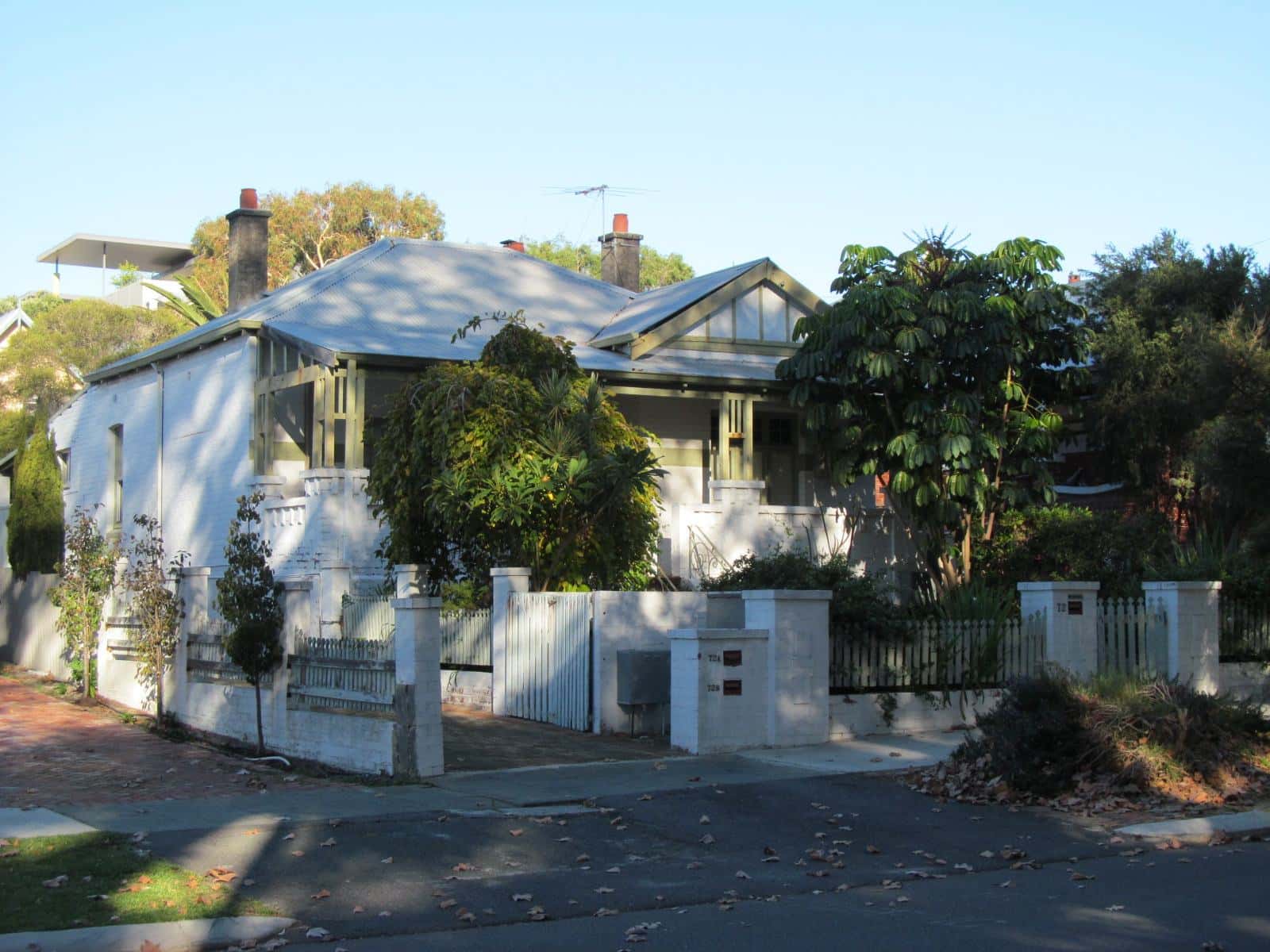
The houses and shops change character as you enter the City of Stirling. The Avenues to the east were among the first parts of Inglewood to be subdivided.
Stop 9: The Civic Hotel and the strip
Inglewood’s village strip has cafés, bakeries and shops, and long-standing local pubs including the Civic Hotel.
Stop 10: Inglewood Post Office and the clock tower
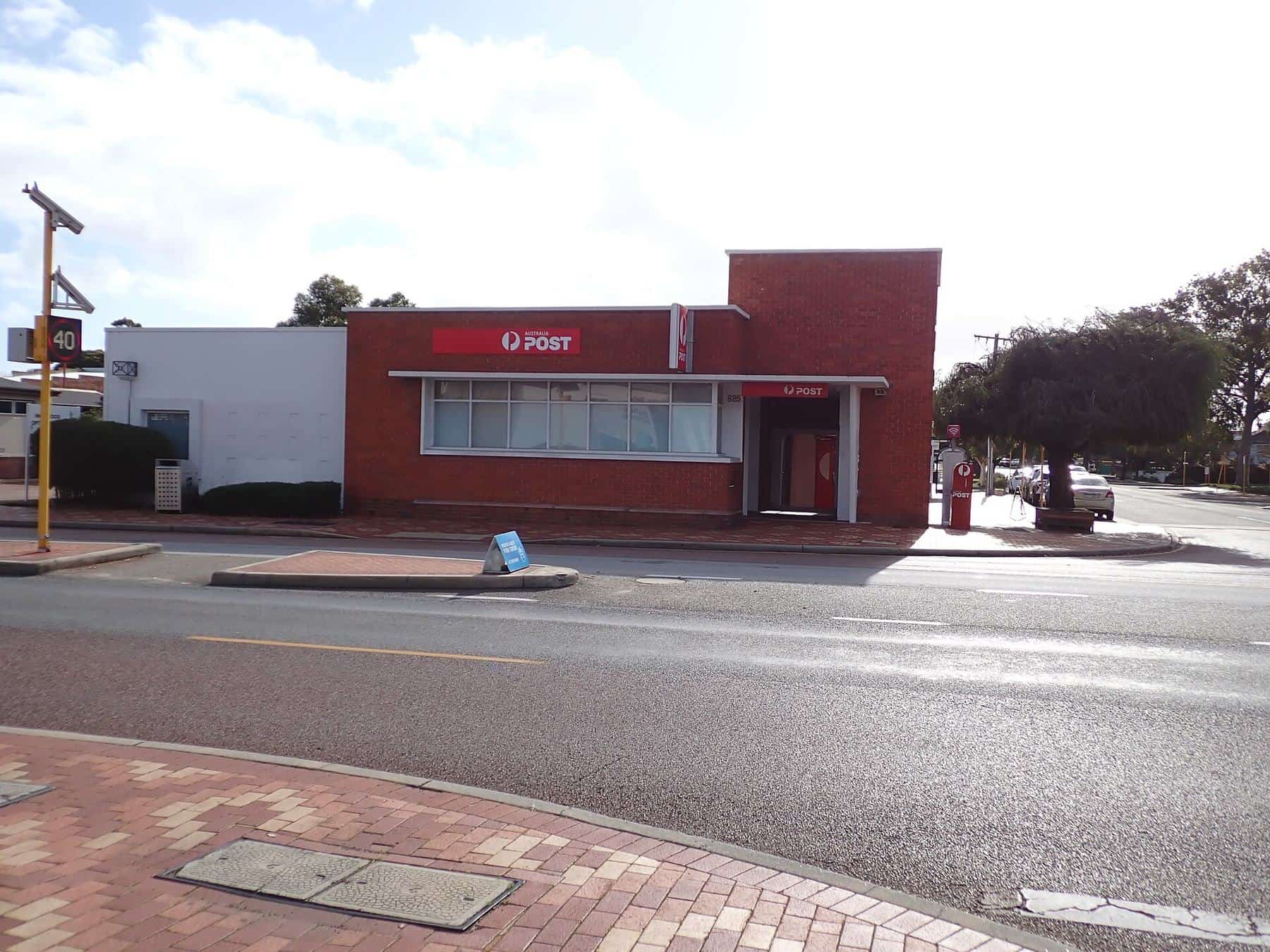
Finish at the post office and the clock tower on the corner of Dundas Road. The Inglewood Civic Centre, opened in 1991, houses the library. See Inglewood.
Walking tour checklist
0 of 11 done
Ticks are saved in this browser only.
Food and rest stops
There are plenty of places to pause:
- Highgate (stops 4–5): cafés and bakeries around Mary Street. Hyde Park has toilets, water fountains and shade.
- Mount Lawley (stops 6–7): the busiest dining strip, ideal for lunch.
- Inglewood (stops 9–10): cafés on the village strip and the library at the civic centre.
Opening hours vary, and many restaurants close between lunch and dinner. Carry water in summer, as Perth afternoons can be very hot.
Taking photos
Morning light suits west-facing facades and afternoon light suits east-facing ones. The Astor is best photographed from across Walcott Street. Be considerate when photographing people, private homes and shopfronts.
Walking with children
The full route is long for young children, but the Highgate section works well. Start at Hyde Park’s playgrounds, then walk to Mary Street for a snack. In summer, the Hyde Park Water Playground at Vincent and Throssell streets (seasonal) is a welcome stop. Use the buses to skip sections when little legs get tired.
Shorter versions
- Highgate loop (1 hour): Queens Hotel, Sacred Heart, Mary Street, Hyde Park and back.
- Heritage highlights (1.5 hours): terraces, Bowra & O’Dea, Sacred Heart and the Astor.
- Mount Lawley and Inglewood (1.5 hours): the Astor north to the clock tower, finishing with lunch.
Safety
Beaufort Street is a busy road. Cross at signals, watch for cyclists and turning cars, and take care at side-street crossings. The City of Stirling has noted that the speed limit through Inglewood is 40 km/h.
Continue
Read more about the buildings in our heritage field guide.
Frequently asked questions
How long is the Beaufort Street walk?
From the Perth Cultural Centre to the clock tower at Dundas Road in Inglewood is roughly 5 km one way. Allow 2–3 hours with stops, or split it into sections.
Can I do just part of the walk?
Yes. The Highgate-to-Mount Lawley section, from the Queens Hotel to Walcott Street, is the most popular and takes under an hour with stops. Buses run along the whole street, so you can ride back.
Is the walk accessible?
The footpaths are mostly flat to gently sloping, with signalised crossings at major intersections. Some older footpaths are uneven, and there are kerbs at side streets.
What is the best time of day for the walk?
Morning is coolest in summer and suits the city-end museums, which open in the morning. Starting in the afternoon lets you finish with dinner in Mount Lawley or Inglewood. Avoid the hottest part of summer afternoons.